
Cordyceps: What the Science Says
Cordyceps militaris
Cordyceps appears in traditional-use histories and modern research focused on cordycepin and polysaccharides.
What the research looks promising for
A placebo-controlled trial of a standardized extract reported improved exercise capacity in older adults; animal and lab studies explore fatigue- and immune-related markers.
Where the evidence is thin — or cautionary
Most evidence is preclinical; human trials are few and small. Cordycepin content varies widely by product. Findings are investigational — not HelloSpore product claims.
Watch & listen
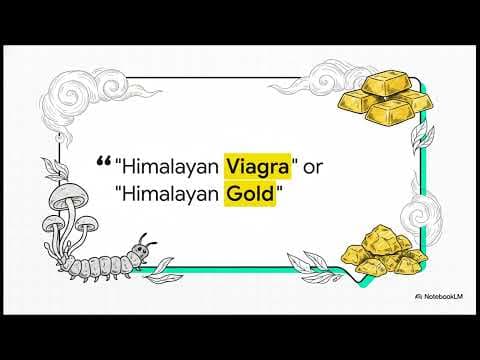
12 short, plain-language Cordyceps resources built from the studies below.
The research (7 studies)
Sorted strongest-evidence-first. Each shows a plain-language bottom line and how much weight it can bear. See the plain-language glossary →
Healthy older adults taking a standardized Cordyceps supplement for 12 weeks improved their exercise capacity versus placebo — the best human evidence for the 'stamina' claim.
Chen, S., Li, Z., Krochmal, R., Abrazado, M., Kim, W., & Cooper, C. B. (2010). Effect of Cs-4® (Cordyceps sinensis) on exercise performance in healthy older subjects: A double-blind, placebo-controlled trial. Journal of Alternative and Complementary Medicine, 16(5), 585–590.
In a mouse model of depression, cordycepin (from Cordyceps) reversed depression-like behavior and raised a brain-growth protein — a mechanism clue, not human proof.
Tianzhu, Z., Shihai, Y., & Juan, D. (2014). Antidepressant-like effects of cordycepin in a mice model of chronic unpredictable mild stress. Evidence-Based Complementary and Alternative Medicine, 2014, 438506.
Cordyceps helped mice swim longer before exhaustion and lowered their stress-hormone levels — early animal support for the traditional 'energy and stamina' use.
Koh, J. H., Kim, K. M., Kim, J. M., Song, J. C., & Suh, H. J. (2003). Antifatigue and antistress effect of the hot-water fraction from mycelia of Cordyceps sinensis. Biological and Pharmaceutical Bulletin, 26(5), 691–694.
In standard mouse tests, a Cordyceps extract acted like an antidepressant and raised mood-related brain chemicals — a mechanism clue, not human proof.
Nishizawa, K., Torii, K., Kawasaki, A., Katada, M., Ito, M., Nishimura, T., Kobayashi, M., Nemeroff, C. B., & Bhattacharya, S. K. (2007). Antidepressant-like effect of Cordyceps sinensis in the mouse tail suspension test. Biological and Pharmaceutical Bulletin, 30(9), 1758–1762.
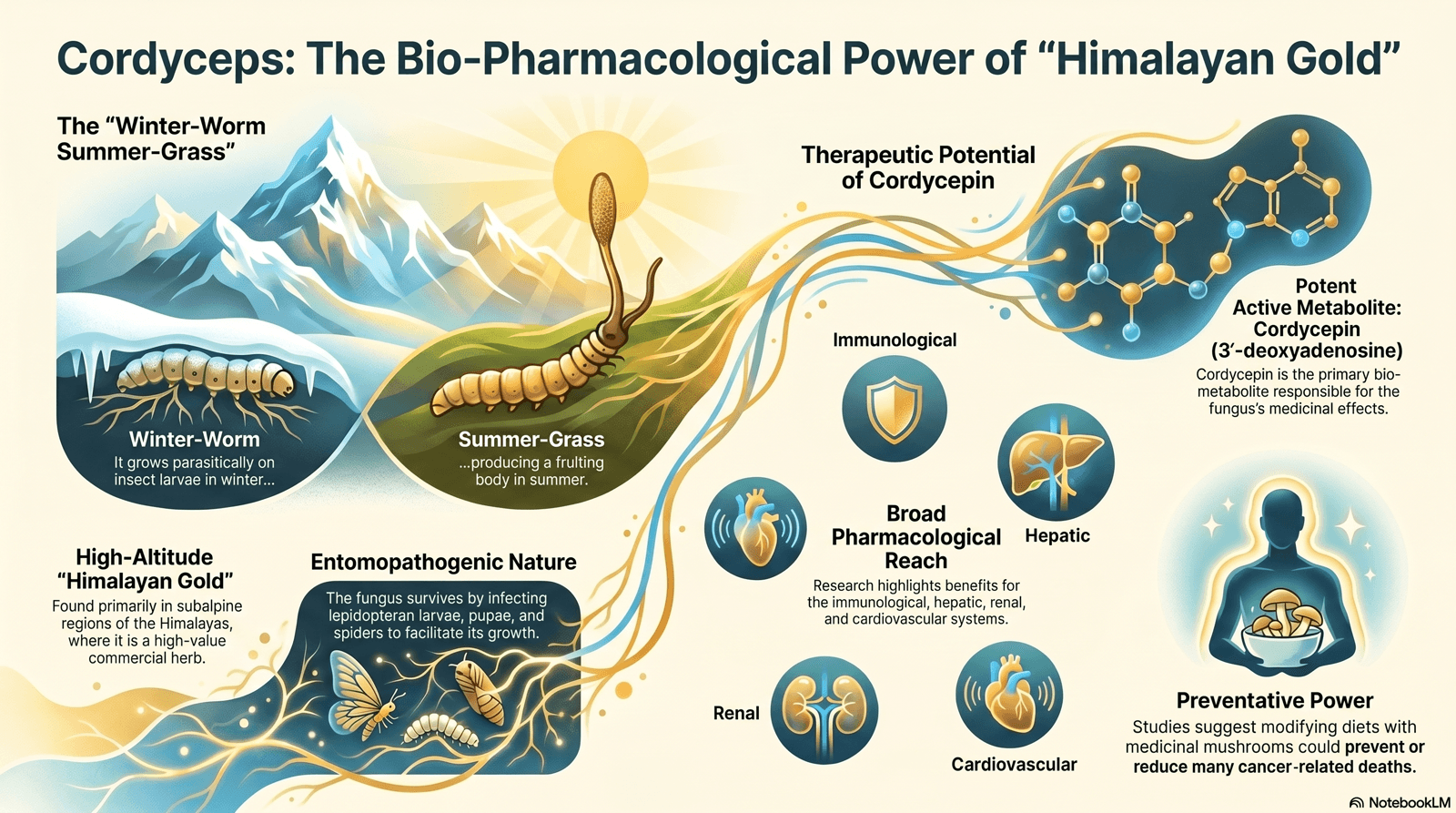
A thorough review of cordycepin, Cordyceps's star compound, and its many effects (anti-cancer, antiviral, anti-inflammatory) seen mostly in lab and animal studies.
Ashraf, S. A., Elkhalifa, A. E. O., Siddiqui, A. J., Patel, M., Awadelkareem, A. M., Snoussi, M., Ashraf, M. S., Adnan, M., & Hadi, S. (2020). Cordycepin for health and wellbeing: A potent bioactive metabolite of an entomopathogenic medicinal fungus Cordyceps with its nutraceutical and therapeutic potential. Molecules, 25(12), 2735.
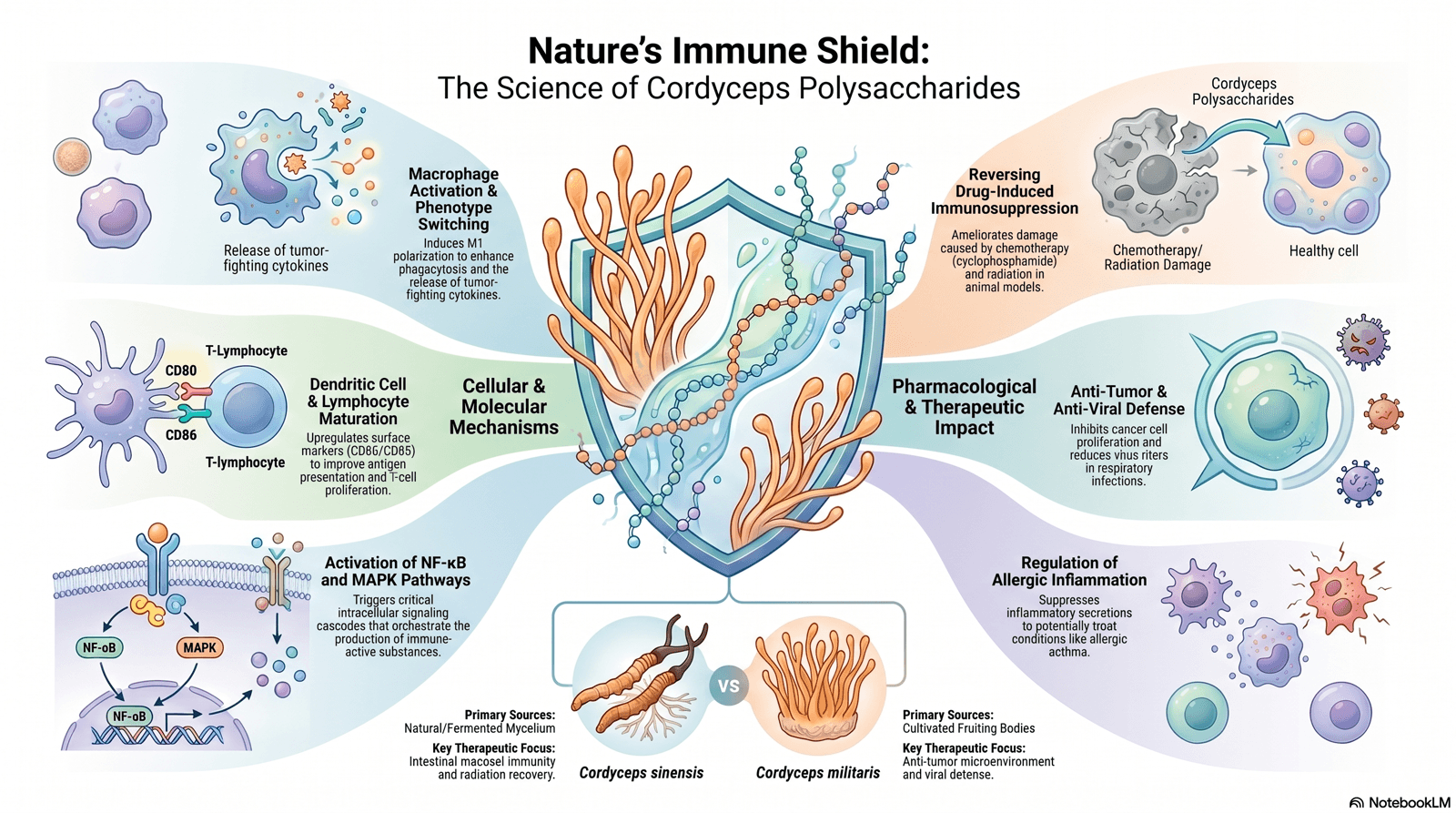
Twenty years of studies show Cordyceps's natural sugars can switch on immune cells and help fight tumors in animal tests — promising, but mostly pre-human.
Chen, L., Liu, X., Zheng, K., Wang, Y., Li, M., Zhang, Y., Cui, Y., Deng, S., Liu, S., Zhang, G., Li, L., & He, Y. (2024). Cordyceps polysaccharides: A review of their immunomodulatory effects. Molecules, 29(21), Article 5107.
Reviews cordycepin's anti-cancer, antioxidant, and anti-inflammatory effects in lab and animal studies — promising, but not ready for medical use until it can be made at scale.
Tuli, H. S., Sandhu, S. S., & Sharma, A. K. (2014). Pharmacological and therapeutic potential of Cordyceps with special reference to cordycepin. 3 Biotech, 4(1), 1–12.
Explore Cordyceps spores & cultures
Laboratory-grade Cordyceps militaris cultures for cultivation. Contaminant-free, discreet US shipping.
Shop the catalog →