
Lion's Mane: What the Science Says
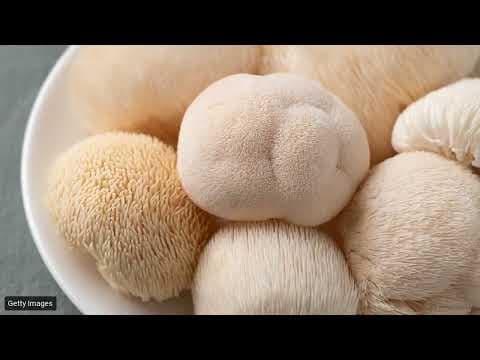
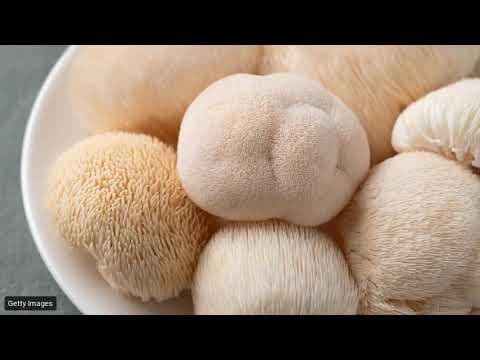
Hericium erinaceus
Lion's Mane is among the most-studied functional mushrooms in neuroscience literature. Researchers focus on compounds called erinacines and hericenones and their relationship to nerve growth factor pathways.
What the research looks promising for
Early human trials have reported modest memory or mood/sleep signals in some groups; lab and animal studies explore nerve-growth-related mechanisms.
Where the evidence is thin — or cautionary
Most trials are small and short, and in a key memory study reported benefits faded after people stopped taking it. Findings are investigational — not proven treatments — and do not describe HelloSpore products.
Watch & listen
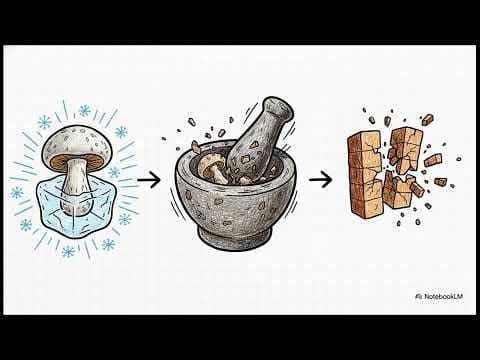
8 short, plain-language Lion's Mane resources built from the studies below.
The research (9 studies)
Sorted strongest-evidence-first. Each shows a plain-language bottom line and how much weight it can bear. See the plain-language glossary →
Women who took Lion's Mane for four weeks reported less anxiety and depression than those on a placebo — an early sign it may lift mood, not just memory.
Nagano, M., Shimizu, K., Kondo, R., Hayashi, C., Sato, D., Kitagawa, K., & Ohnuki, K. (2010). Reduction of depression and anxiety by 4 weeks Hericium erinaceus intake. Biomedical Research, 31(4), 231–237.
Older adults with mild memory problems who took Lion's Mane daily for four months scored better on memory tests than those on a placebo — but the benefit faded after they stopped.
Mori, K., Inatomi, S., Ouchi, K., Azumi, Y., & Tuchida, T. (2008). Improving effects of the mushroom Yamabushitake (Hericium erinaceus) on mild cognitive impairment: A double-blind placebo-controlled clinical trial. Phytotherapy Research, 23(3), 367–372. https://doi.org/10.1002/ptr.2634
Overweight adults taking Lion's Mane for eight weeks reported better mood and sleep, alongside changes in a brain-growth protein that hint at how it might help.
Vigna, L., Morelli, F., Agnelli, G. M., Napolitano, F., Ratto, D., Occhinegro, A., Di Iorio, C., Savino, E., Girometta, C., Brandalise, F., & Rossi, P. (2019). Hericium erinaceus improves mood and sleep disorders in patients affected by overweight or obesity: Could circulating pro-BDNF and BDNF be potential biomarkers? Evidence-Based Complementary and Alternative Medicine, 2019, 7861297.
In a year-long pilot trial, early-stage Alzheimer's patients on a special Lion's Mane extract did better on thinking tests than those on a placebo — the most direct human evidence so far, though still small.
Li, I.-C., Chang, H.-H., Lin, C.-H., Chen, W.-P., Lu, T.-H., Lee, L.-Y., Chen, Y.-W., Chen, Y.-P., Chen, C.-C., & Lin, D.-P. (2020). Prevention of early Alzheimer's disease by erinacine A-enriched Hericium erinaceus mycelia pilot double-blind placebo-controlled study. Frontiers in Aging Neuroscience, 12, 155.
In a small trial with healthy young adults, Lion's Mane sped up thinking shortly after a dose and lowered stress after four weeks — promising, but it needs bigger studies to confirm.
Docherty, S., Doughty, F. L., & Smith, E. F. (2023). The acute and chronic effects of lion's mane mushroom supplementation on cognitive function, stress and mood in young adults: A double-blind, parallel groups, pilot study. Nutrients, 15(22), 4842.
A safety/toxicology assessment of Lion's Mane and Turkey Tail powders found them generally well-tolerated at the doses tested — reassuring, though safety still depends on dose and product quality.
Mahadevan, K., Daoust, J., Brendler, T., Chaudhary, A., Saifi, A., & Garg, V. K. (2025). A toxicological assessment of Hericium erinaceus (Lion's mane) and Trametes versicolor (Turkey tail) mushroom powders. Frontiers in Toxicology, 7, 1651442.
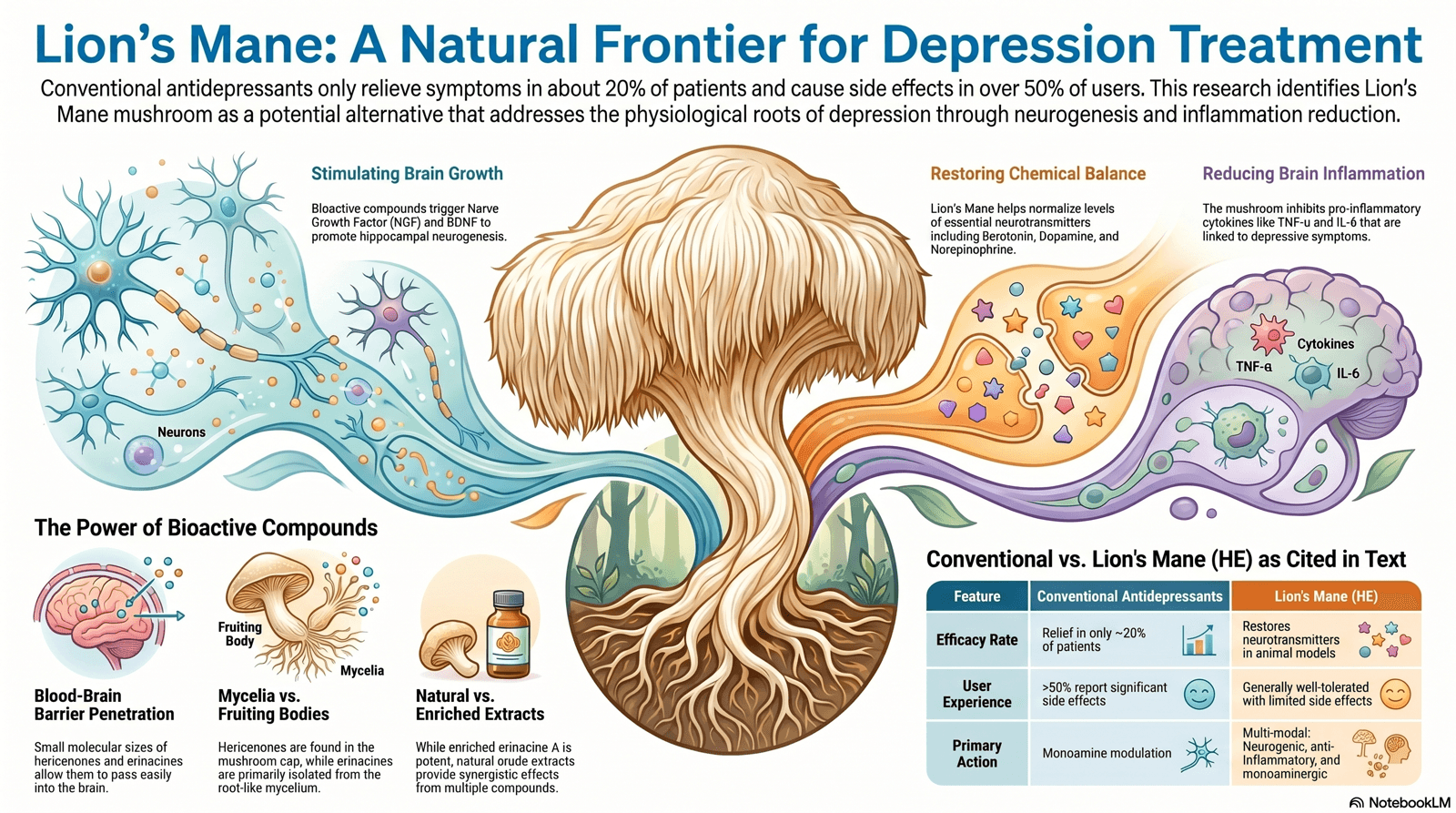
Explains the two Lion's Mane compound families that spur nerve growth, and why the ones from the root-like mycelium may reach the brain better than those from the cap.
Ma, B. J., Shen, J. W., Yu, H. Y., Ruan, Y., Wu, T. T., & Zhao, X. (2010). Hericenones and erinacines: Stimulators of nerve growth factor (NGF) biosynthesis in Hericium erinaceus. Mycology, 1(2), 92–98.
Lays out why Lion's Mane might help depression — by spurring nerve growth rather than changing brain chemicals — while stressing it hasn't been tested against real antidepressants in people.
Chong, P. S., Fung, M.-L., Wong, K. H., & Lim, L. W. (2020). Therapeutic potential of Hericium erinaceus for depressive disorder. International Journal of Molecular Sciences, 21(1), Article 163.
A systematic review weighing both the benefits AND the reported side effects of Lion's Mane supplements — a balanced look rather than a one-sided pitch.
Menon, A., Jalal, A., Arshad, Z., Nawaz, F. A., & Kashyap, R. (2025). Benefits, side effects, and uses of Hericium erinaceus as a supplement: A systematic review. Frontiers in Nutrition, 12, 1641246.
Explore Lion's Mane spores & cultures
Laboratory-grade Hericium erinaceus cultures for cultivation. Contaminant-free, discreet US shipping.
Shop the catalog →